

Leadership, Team Building, and Events
2026
What a Company Can Learn from the ‘Haaland Effect‘ ?
Madrid, July 2026.
Norway has just knocked Brazil out of the tournament and Erling Haaland is once again in the spotlight. But the most talked-about moment of the match wasn’t his goals. It was what happened afterwards: thousands of fans rowing in unison in the stands, guided by a drum, as the entire stadium moved like a single mass, all to the same beat.
That gesture was invented by a supporter a few years ago, as a ritual designed to send collective strength to the team before kick-off. Every fan knows when to join in, how to follow along, what it means. And what made it go viral wasn’t just the choreography — it was also who chose to lead it, in the most genuine way possible.
Organisations are often compared to a ship: in calm waters, any vessel sails effortlessly, but it is in the storm, in the difficult moments, where the true quality of leadership reveals itself. After securing a place in the quarter-finals, superstar Haaland sat down on the pitch, shoulder to shoulder with his teammates, to beat the drum and lead his supporters’ choreography. A world-class figure acting, for that one minute, as just another member of the group.
This is the same principle that underpins any serious team building strategy. A sense of belonging — which cannot simply be decreed by reading it out of a brand book — is built, ritualised and repeated until it stops being a one-off act and becomes a collective response.
The “Haaland effect” in three leadership principles
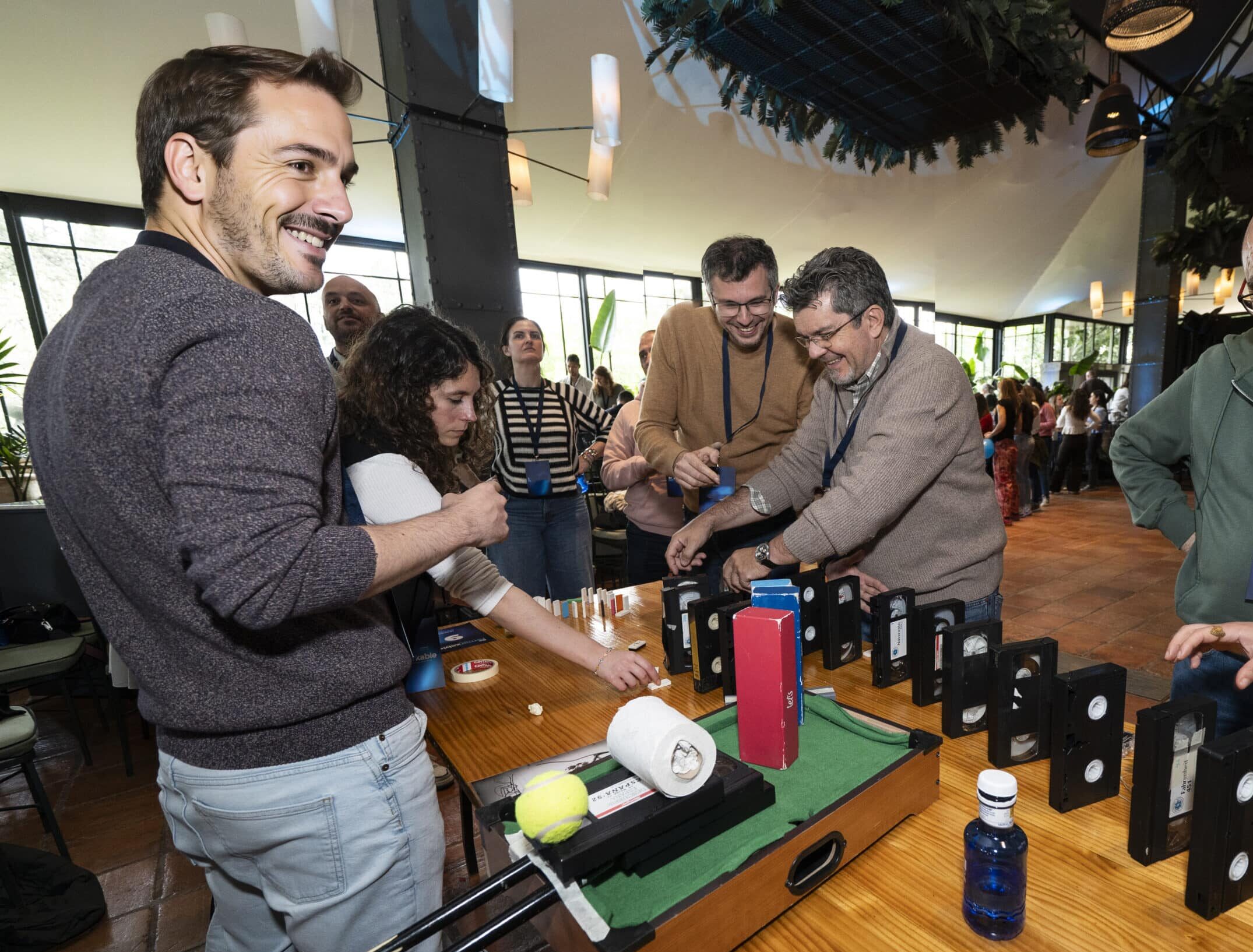
- Horizontal leadership. The most effective leaders know how to step down to the operational level to genuinely connect with their team. A well-designed team building activity does exactly that: it takes managers and teams out of the org chart for a few hours and puts them side by side — solving, playing or building something together, on equal terms.
- Prioritising collective success. Individual performance only has value when it translates into a shared achievement. Celebrating milestones as a team — not just rewarding the top performer — is what strengthens internal culture and aligns people with business goals. Team building becomes a team ritual: the progress of everyone is celebrated. Together, towards a common goal.
- Synchronisation and organisational rhythm. Keeping the beat so that the whole team moves forward together is what coordinated management looks like. Good leadership sets a sustainable pace that prevents burnout.
So how does this translate into an event?
Three concrete ways to activate it:
- Turn participation into a game. When there is competition, engagement goes up. Team challenges, leaderboards, sweepstakes: any dynamic that makes people want to take part, not just watch.
- Build pride in belonging. People remember how you made them feel. Feeling part of something is one of the most powerful emotions there is. A well-designed event reinforces identity, culture and the pride of being on the team.
- Design experiences built around collaboration. In football, nobody wins alone. Events work the same way. Dynamics where people have to listen to each other, make decisions together and combine their talents towards a shared goal.
A well-designed team building activity is, literally, the deliberate construction of a belonging ritual — the very same mechanism that turned an entire stand into a single body moving in unison. Nobody feels part of a team because someone explains it on a slide. They feel it when their body does the same thing as everyone else’s body, at the same time, with a common purpose.
Internal reputation and the sense of belonging are built when every shared experience — with all the effort an organisation puts into creating an event, a convention, an offsite — confirms it.
Because a corporate event shouldn’t just be a moment to bring people together. It should be an opportunity to build culture, leadership and a sense of belonging.
Does your organisation already have its own “Haaland effect”?